
Feature · AI-Assisted Staffing Recommendations
AI that disappears into the work
AI should help you decide, not give you one more panel to manage. We use it where it genuinely earns its place — suggesting the right people, setting itself up, answering the questions you'd otherwise dig for by hand — and we keep it out of the way everywhere else. Every recommendation comes with the reasons behind it, in plain terms. Used smartly, not sprinkled on.
Built with you, not for a demo
Our AI is evolving, and we're building it in the open with the firms who use it. We'd rather solve a real problem you face every week than a clever one nobody has. So if there's a decision or a chore you'd like to automate or enrich with AI, tell us — the best features here started as someone's actual headache, not a roadmap slide.
AI-Assisted Staffing Recommendations
AI should help you decide, not give you one more panel to manage.
Smart allocation
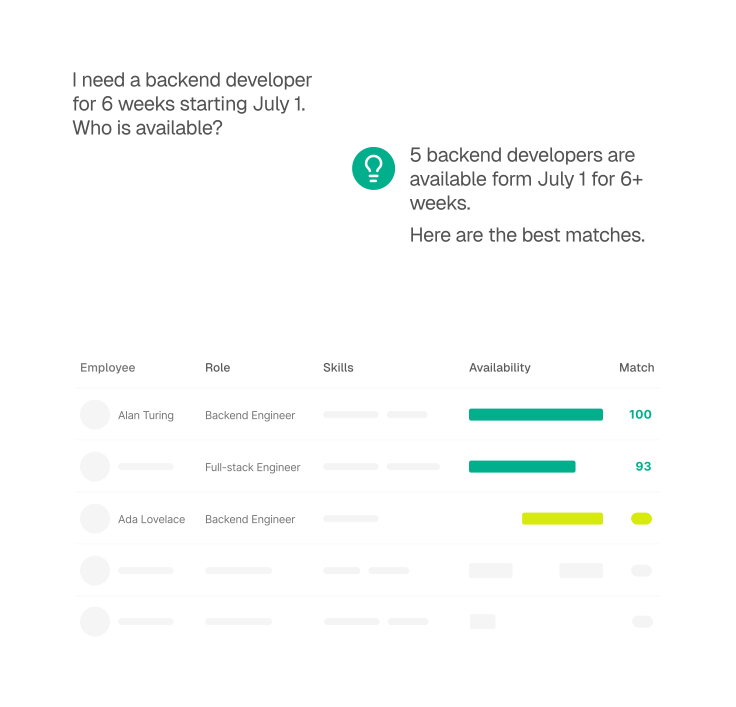
When demand comes in, finding the right person is rarely a clean one-to-one match. Alloxy weighs what actually matters: the role and skills required — including which roles can stand in for others, and how well — alongside availability, cost, exposure to the client, and whether the person has worked with the team before. Instead of scanning spreadsheets and holding it all in your head, you get a shortlist of the best-fit people with the trade-offs laid out. Next, we're teaching it to learn from you. As you accept, adjust, or overrule its suggestions, it will fold your preferences into what it proposes — so over time it fits the way your firm actually staffs rather than a generic model of it.
It understands roles and skills, not just labels
A "front-end developer" and a "React engineer" aren't the same words, but they might be the same person for the job. Alloxy recognises similar roles and skills rather than matching text exactly, so the right people surface even when the titles don't line up.
Onboarding that sets itself up
Getting started is usually the hardest part — and the place most tools lose you. Alloxy uses AI to import and map data from your existing systems, translating and cleaning it as it goes, so your people, projects, and allocations arrive already structured. Less manual setup, faster value.
Ask your data a question
Some answers shouldn't require a report. Just ask — which front-end developer is free in two weeks? — and Alloxy answers, instead of leaving you to filter, cross-reference, and piece it together yourself.
Scenario planning, prepared for you
A new project lands and needs staffing. Today that means manually chasing availability, future demand, and pipeline before you can even start weighing options. Soon Alloxy will do that groundwork and hand you the scenarios: staff it now, delay it, swap resources, or push another project — each with its impact laid out, including the earliest point you could realistically start. You stop assembling the picture and go straight to the decision.
Connect your own agents and models
We're building Alloxy as an open platform, and MCP — the Model Context Protocol — is a big part of how. It's an emerging open standard that lets AI agents and assistants talk to the tools they work with. With MCP, you'll be able to connect your own agents and LLMs directly to Alloxy and work with your resource operations from wherever you already are — asking questions, checking availability, or planning, without opening the app at all. The interface we built becomes one way to work with Alloxy, not the only one.
More features